Dr.Vijayalakshmi Aluri, Winner of World Bank’s Projects competition, Author, Health Educator, Social worker, and Gynecologist, Sri Sri Holistic Multi-Specialty Hospitals, Hyderabad.
The Childhood We Knew Is Gone
Never before in human history have children been so connected to the world — and yet so vulnerable to feeling isolated, anxious, and overwhelmed.
A generation ago, children spent their evenings playing outdoors, talking with family members, reading books, and building friendships face-to-face. Today, many children wake up with a smartphone beside them; spend hours scrolling through social media, and go to sleep after staring at screens late into the night.
Technology has brought remarkable opportunities for learning and communication, but it has also introduced challenges that many parents, teachers, and healthcare professionals are only beginning to understand.
As we navigate this digital age, one question becomes increasingly important: How can we ensure that technology enriches our children’s lives without harming their mental well-being?
A Story That Reflects a Growing Reality
Fourteen-year-old Dhruthi (name changed) was a bright and cheerful student. She excelled in school, enjoyed painting, and had a close circle of friends. During the pandemic, online classes became a necessity, and her screen time increased significantly.
What began as educational use soon expanded into social media, online gaming, and endless scrolling through videos. Gradually, her parents noticed changes. She became withdrawn, irritable, and reluctant to participate in family activities. Her sleep pattern was disturbed, her academic performance declined, and she constantly compared herself with influencers and celebrities online.
One day, her mother found her crying after receiving negative comments on a social media post. Dhruthi confessed that she often felt inadequate and lonely despite having hundreds of online followers.
Fortunately, her parents recognized the warning signs early. They sought professional guidance, established healthy digital boundaries, encouraged outdoor activities, and rebuilt family communication. Over time, Dhruthi regained her confidence and emotional balance.
Her story is not unique. Across the world, millions of children are facing similar struggles in silence.
The Digital Revolution: A Double-Edged Sword
Technology is neither good nor bad by itself. It is a tool. When used wisely, it can educate, inspire, and connect. Children can access educational resources, develop new skills, and maintain relationships across distances.
However, excessive or uncontrolled digital exposure can have unintended consequences.
Many children today spend several hours each day on smartphones, tablets, computers, and gaming devices. As screen time increases, opportunities for physical activity, family interaction, creative play, and adequate sleep often decrease.
The result is a growing concern among mental health experts regarding the emotional well-being of young people.
The Hidden Impact on Mental Health
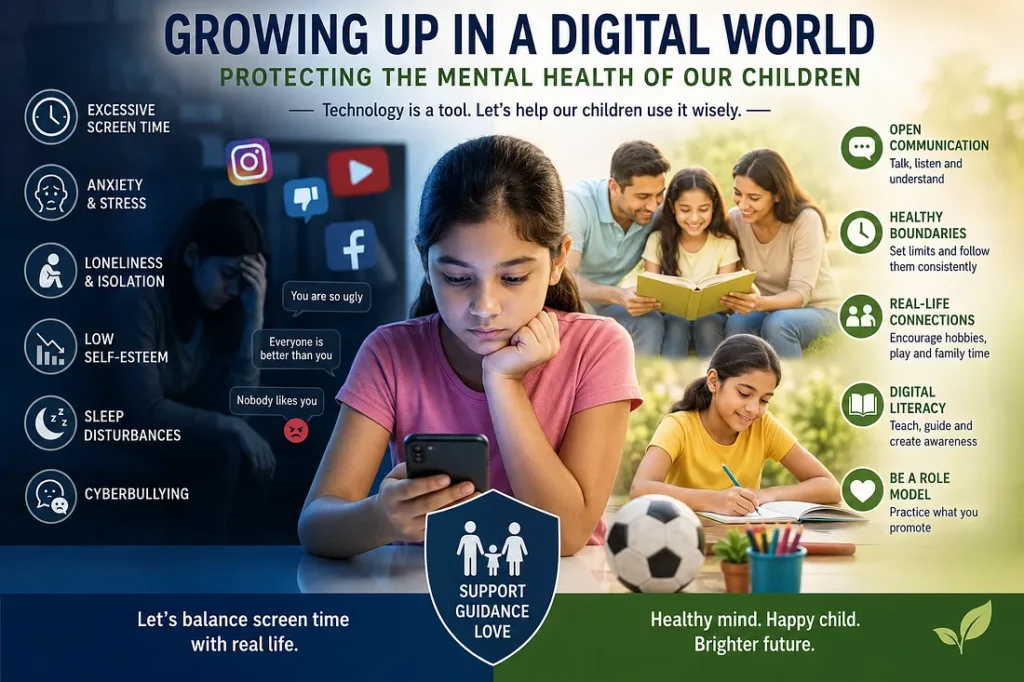
1. Anxiety and Stress
Children are constantly exposed to information, opinions, and expectations online. Academic pressure, social comparison, and fear of missing out can create chronic stress.
Many adolescents feel compelled to remain connected at all times, fearing they may miss an important message, trend, or social interaction.
2. Depression and Loneliness
Paradoxically, being digitally connected does not always lead to meaningful connection. Online interactions may lack the emotional depth of face-to-face relationships.
Children who spend excessive time online often report feelings of loneliness, isolation, and sadness despite being surrounded by virtual contacts.
3. Low Self-Esteem and Body Image Issues
Social media often presents unrealistic images of beauty, success, and happiness. Young minds may compare themselves with carefully edited photographs and curated lifestyles.
This constant comparison can damage self-confidence and create feelings of inadequacy.
4. Sleep Disturbances
Many children use electronic devices late into the night. The blue light emitted from screens interferes with the body’s natural sleep cycle.
Poor sleep affects concentration, memory, emotional regulation, and academic performance.
5. Cyberbullying
Unlike traditional bullying, cyberbullying can follow a child everywhere. Hurtful messages, online harassment, and public humiliation can have devastating psychological consequences.
Some victims experience anxiety, depression, and in severe cases, self-harm tendencies.
Warning Signs Parents Should Not Ignore
Parents are often the first line of defence. Recognizing early warning signs can make a significant difference.
Watch for:
- Sudden withdrawal from family and friends
- Changes in sleep patterns
- Declining academic performance
- Excessive secrecy regarding online activities
- Irritability when devices are removed
- Loss of interest in hobbies and outdoor activities
- Persistent sadness, anxiety, or mood swings
- Reduced self-confidence
These signs do not necessarily indicate a serious problem, but they deserve attention and open conversation.
Building Digital Resilience
Protecting children’s mental health does not mean banning technology. Instead, it requires helping them develop healthy habits and emotional resilience.
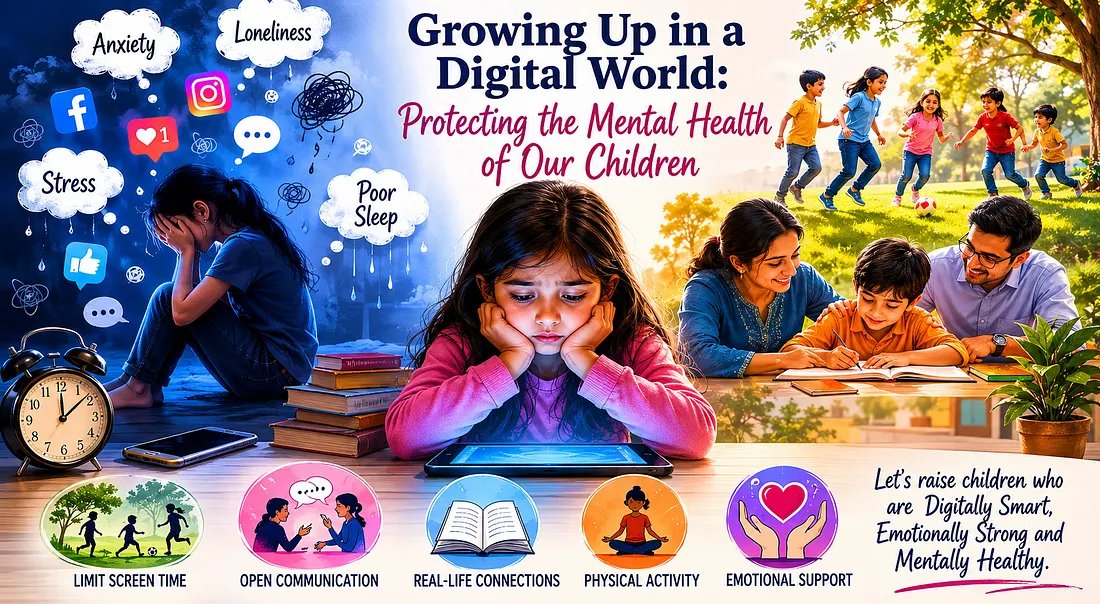
Encourage Open Communication
Children should feel safe discussing their online experiences without fear of punishment or criticism.
Ask questions such as:
- What do you enjoy online?
- Has anyone ever made you uncomfortable on social media?
- How do certain posts make you feel?
Listening is often more powerful than lecturing.
Set Healthy Boundaries
Establish reasonable screen-time limits appropriate for the child’s age.
Create technology-free zones such as:
- Dining tables
- Family gatherings
- Bedrooms during night time
Consistency is more effective than strict enforcement.
Prioritize Real-Life Connections
Encourage children to participate in sports, arts, music, reading, volunteering, and community activities.
Meaningful real-world experiences help build confidence, empathy, and social skills.
Promote Digital Literacy
Teach children that not everything they see online reflects reality.
Help them understand:
- Photo editing
- Misinformation
- Advertising influences
- Online privacy risks
An informed child is better equipped to navigate the digital world safely.
Model Healthy Behaviour
Children learn more from what adults do than what adults say.
Parents who spend excessive time on phones may unintentionally send conflicting messages. Healthy digital habits should begin at home.
The Role of Schools and Communities
Mental health is not solely a family responsibility.
Schools can play a crucial role by:
- Incorporating digital wellness education
- Providing mental health support services
- Teaching emotional intelligence
- Creating awareness about cyberbullying
Communities, healthcare providers, and policymakers must also work together to ensure that children’s mental health remains a public health priority.
Raising Strong Minds for the Future
The digital world is here to stay. Artificial intelligence, virtual reality, and emerging technologies will continue to shape the lives of future generations.
Our goal should not be to shield children from technology but to equip them with the wisdom, resilience, and emotional strength needed to use it responsibly.
Children need more than internet access. They need human connection. They need conversations, encouragement, understanding, and guidance.
Conclusion
The greatest gift we can offer our children in this digital age is not the latest gadget or fastest internet connection — it is emotional security, healthy relationships, and the confidence to navigate life both online and offline.
When families, schools, healthcare professionals, and communities work together, we can raise a generation that embraces technology without becoming controlled by it — a generation that is digitally skilled, emotionally resilient, and mentally healthy.
Because in a world increasingly connected by screens, the most powerful connection remains the human heart.